Powerlifting vs Olympic Weightlifting — A National Champion Coach Settles the Debate
A Direct Answer, Not a Hedge
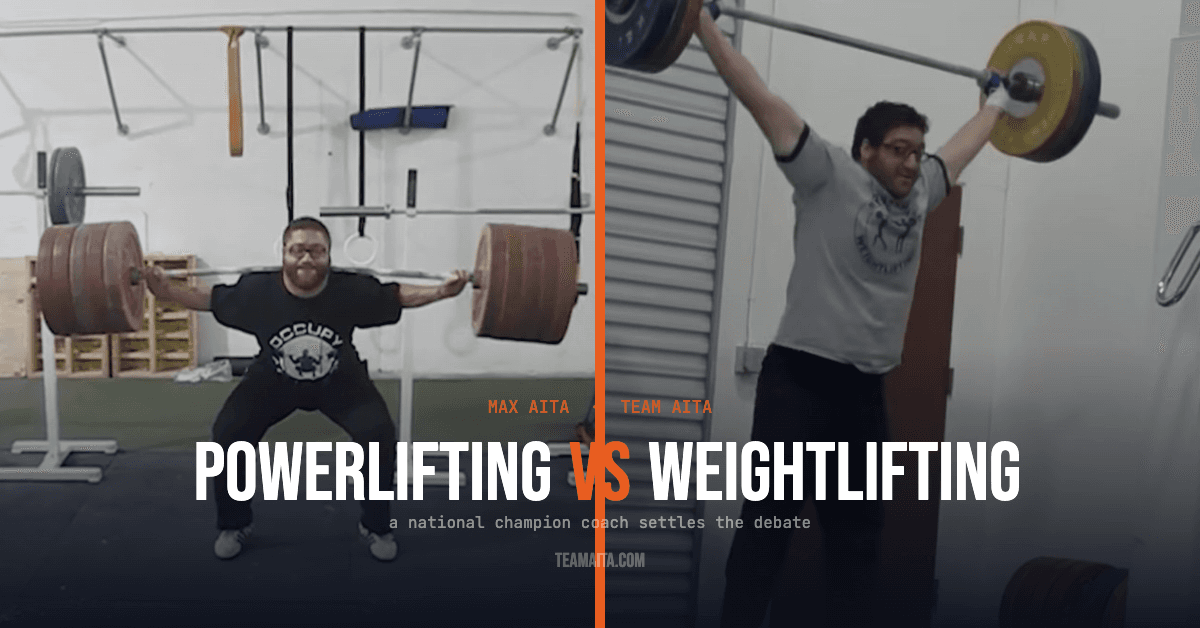
Powerlifting and Olympic weightlifting are both strength sports, but they demand fundamentally different things from an athlete. Powerlifting tests maximum strength in three lifts — the squat, bench press, and deadlift. Olympic weightlifting tests explosive power and technical precision in two lifts — the snatch and the clean and jerk. As a coach who has worked with athletes in both sports, I can tell you the question isn't which sport is better. The question is which sport is right for you. The answer depends on what you want from training — and I'll give you a direct answer, not a hedge.
Most comparison articles on olympic weightlifting vs powerlifting say "it depends" and leave you exactly where you started. This one won't. I've coached athletes in both sports at the national level, and I have a clear opinion on who belongs where.
The question isn't which sport is better. The question is which sport is right for you.
The Question Behind the Question
Your personality and your preferences will tell you which sport you're gravitating toward before your body ever does.
In my experience, athletes who are drawn to powerlifting tend to like rigidity and predictability. Powerlifting is a consistent sport by nature — the technical elements rarely change dramatically, and the problems you're solving from year to year are largely the same ones. Get stronger. Move the bar more efficiently. Lift more weight.
Weightlifting is different. It's creative. It requires ongoing external coaching and constant attention to technique, because the snatch and clean and jerk are living skills — they change, they drift, they break down under fatigue, and they require regular problem-solving to maintain and develop. If you enjoy variety, technical puzzles, and the kind of day-to-day physical and mental unpredictability that keeps training interesting, weightlifting will feel right. If you prefer steady, measurable, consistent progress and a more straightforward path forward, powerlifting is probably your sport.
Neither answer is wrong. But being honest with yourself about which one sounds more appealing is probably the most useful thing you can do before reading the rest of this post.
The Key Differences: Powerlifting vs Weightlifting
The Lifts
Powerlifting competition consists of three lifts: the squat, the bench press, and the deadlift. The goal is simple — lift the most weight possible in each movement. Olympic weightlifting consists of two lifts: the snatch, and the clean and jerk. The goal there is still to lift the most weight, but the path to doing it is entirely different. Where powerlifting rewards brute force applied through relatively stable, well-understood movement patterns, weightlifting rewards explosive power coordinated with technical precision — every single time, under competition pressure.
The technical demand is not comparable. Powerlifting has a low technical ceiling — outside of minute efficiency adjustments, most athletes reach adequate technique relatively quickly. The snatch and clean and jerk can take years to develop to a competitive standard and require constant attention to maintain. That's the real technical gap in weightlifting vs powerlifting — one sport has a low technical ceiling, the other takes years to master.
The Physical Demands
Athletes who respond well to weightlifting tend to have a natural degree of mobility, explosive strength, and body awareness. Absolute strength matters in weightlifting — you can't snatch what you can't lift — but it must be paired with the ability to coordinate complex, fast movements through a full range of motion. Mobility requirements in weightlifting are significant and non-negotiable. The overhead receiving positions for the snatch and jerk demand shoulder flexibility, thoracic extension, and ankle mobility that many athletes need to develop specifically.
Powerlifting requires less mobility overall. As long as you can hit the correct depth in the squat and set up properly for the bench and deadlift, the movement demands are much more manageable from day one. Body type and limb proportions play a larger role in powerlifting, because maximizing leverage in each lift can have a significant effect on your total. And because force production is the primary quality being tested, the athlete who can produce the most force in a straight line wins — full stop.
The learning curve in weightlifting is genuinely steeper. That's not a knock on either sport — it's just the reality. Weightlifting requires athletes to be comfortable with failure and open to ongoing technical problem-solving in a way that powerlifting doesn't demand to the same degree.
The Training Approach
Weightlifting training is technique-first by design. The goal at every stage of development is to maximize technical execution and efficiency before adding load. This means extended periods of submaximal training, a large library of specific exercises to develop the athlete's feel for the classic lifts, and a long-term development philosophy where technical mastery comes before intensity.
Powerlifting is more outcome-focused from the start. Athletes can typically perform the competition lifts with correct technique very quickly after beginning, which means programming becomes the primary differentiator earlier in the career. Matching the right training stimulus to the individual athlete's response — progressively increasing load and volume in a way that the athlete can recover from — is where the art of powerlifting programming lives. Both sports take programming seriously. The difference is where the emphasis falls and at what point in the athlete's career it does so.
The Equipment
The equipment in both sports is more similar than most people expect. Both use barbells and weight plates as the primary tools. The differences are specific: Olympic weightlifting uses bumper plates (rubber-coated, consistent diameter) because lifts are dropped from overhead. Powerlifting uses calibrated iron plates, and requires a squat rack, bench press, and deadlift platform. In terms of personal equipment, athletes in both sports typically wear a heeled shoe (weightlifting shoes are more common in weightlifting; powerlifting shoes or flat shoes depending on the lift), a lifting belt, and some form of wrist support. Powerlifters may also use knee sleeves or wraps, and a singlet is required for competition in both sports.
| Category | Powerlifting | Olympic Weightlifting |
|---|---|---|
| Competition Lifts | Squat, Bench Press, Deadlift | Snatch, Clean & Jerk |
| Primary Quality | Maximum strength | Explosive power + precision |
| Technical Ceiling | Low | High — years to master |
| Mobility Demands | Moderate | Significant, non-negotiable |
| Training Emphasis | Load & volume progression | Technique before intensity |
| Equipment | Calibrated plates, rack, bench | Bumper plates, lifting platform |
What an Olympic Weightlifter vs Powerlifter Actually Looks Like
This isn't a physique post, and I'm not ranking body types. But after coaching athletes in both sports, there are consistent physical patterns worth being honest about.
Powerlifters at the same competitive level as weightlifters are generally more muscular. Hypertrophy is a genuine performance tool in powerlifting — more muscle cross-section means more force production capacity, which means more weight on the bar. Training programs reflect this, and the body adapts accordingly.
Weightlifters tend to be leaner relative to height and body weight, because the qualities being trained — explosive speed, coordination, mobility — don't require the same degree of muscle mass to express. A weightlifter who adds unnecessary mass may actually slow down, lose mobility, or compromise positions. The sport selects for athleticism first.
Neither body type is superior. They're both reflections of what the sport demands. If you train seriously in either discipline for long enough, your body will move toward what the sport requires of it. At the end of the day, weightlifter vs powerlifter isn't a body-type debate — it's a reflection of what years of sport-specific training does to an athlete.
Max Aita's Verdict: Which Sport Is Right for You
Choose Olympic Weightlifting If:
You're drawn to explosive, athletic movement and the idea of technical mastery over years of practice. Weightlifting rewards athletes who are cerebral about their training — who like to analyze what went wrong in a lift, experiment with solutions, and find genuine satisfaction in incremental technical improvement that isn't always visible in the numbers.
Doing a snatch is like jumping from one rooftop to another. There's a point of no return in the movement — a moment where you've committed and there's no backing out.
That combination of athleticism, courage, and precision is what makes weightlifting unique. If that sounds exciting rather than terrifying, this is your sport.
Weightlifting is also an exceptional choice for athletes from other sports looking to develop explosive power that transfers — the movement patterns in the snatch and clean and jerk are among the best-documented tools for improving athletic performance across sports. If you're willing to invest in a steep learning curve and the long-term technical development it requires, weightlifting will pay off in ways that are hard to find anywhere else.
Choose Powerlifting If:
You value steady, measurable progress and a more straightforward path to strength. Powerlifting doesn't ask you to tolerate years of technical ambiguity — you can walk into a gym, learn the squat, bench, and deadlift with decent technique relatively quickly, and start progressing almost immediately. That accessibility is a real advantage, not a weakness.
Powerlifting is also the right choice if maximum absolute strength is your primary performance goal, if overhead mobility limitations make the snatch position genuinely difficult to access, or if you simply prefer a training environment built around consistency and progressive overload rather than day-to-day technical variability.
The strength you build in powerlifting is real and transferable. Don't let anyone tell you it's the lesser sport. It's a different sport, with different demands, that produces different qualities. For the right athlete, it's the perfect fit.
What I Tell Athletes Who Ask Me This Question
When an athlete comes to me undecided, I ask them one question: do you want to be strong, or do you want to be athletic?
That's not a complete answer, and I know it. Both sports build both qualities to some degree. But it cuts to the preference that usually drives the decision. Athletes who light up at the idea of being as strong as humanly possible — who want to squat 600 pounds and deadlift 700 and feel that kind of raw power — those athletes usually belong in powerlifting.
Athletes who want to move well, be explosive, and develop a technical skill that takes years to master — who are energized by the complexity of the snatch rather than intimidated by it — those athletes usually belong in weightlifting.
The one thing I tell every undecided athlete: try both. Spend three months taking the snatch and clean and jerk seriously with a competent coach. If you're frustrated by the technical demands after three months of honest effort, powerlifting is probably your home. If you're hooked by the puzzle of it, you've found your sport.
If you're new to weightlifting, start with our beginner programme →
Your next PR starts with the right sport.
If you've decided weightlifting is your sport — Team Aita gives you Max Aita's programming, coaching cues, and an AI-powered system that adapts to you.
Start Free Trial →Can You Do Both? Powerlifting and Weightlifting Together
The short answer: yes, but not optimally at the same time, and not at high intensity in both.
The programming philosophies conflict when pushed to their limits. Weightlifting demands technical freshness — you need to come into sessions with enough recovery that your movement quality is high. Heavy powerlifting accumulates the kind of fatigue that degrades exactly that. If you're squatting heavy three times a week for powerlifting and trying to snatch four times a week for weightlifting, something is going to suffer, and it's usually the technical work.
The approach that works best: pick one sport as your primary focus, and use elements of the other as accessory work. A weightlifter can absolutely use deadlifts and bench press as supplementary strength work — many do. A powerlifter can use hang power cleans or kettlebell work to develop explosiveness without the full technical demand of the classic lifts. Where it breaks down is when athletes try to genuinely compete in both simultaneously, peak for both, and program both with equal priority. That's when you get mediocre results in both rather than excellent results in one.
Who it works for: athletes earlier in their training career who are still exploring, or experienced athletes with a specific cross-training goal. Who it doesn't: competitive athletes within 12–16 weeks of a major competition in either sport.
If you're committed to weightlifting, here's how Max programmes it →
Frequently Asked Questions
Is Olympic weightlifting harder than powerlifting?+
They're different, not harder and easier. Weightlifting has a significantly steeper technical learning curve — the snatch and clean and jerk are among the most complex movements in sport, and it takes years of consistent practice to develop them to a competitive level. Powerlifting is equally demanding at the elite level in terms of physical output. What you mean by "harder" determines the answer: harder to learn, weightlifting wins. Harder to express maximum effort, that's a matter of individual preference.
Can a powerlifter do Olympic weightlifting?+
Yes, but it requires substantial investment in mobility and technique work before the strength advantage becomes useful. Strength transfers — positions don't. Powerlifters often come in with impressive force production capacity but find the overhead receiving position of the snatch, and the thoracic and hip mobility demands of the clean, require months of dedicated work before they feel manageable. The strength is an asset. Getting it into the right positions is the challenge.
Which sport builds more muscle — powerlifting or weightlifting?+
Powerlifting generally produces more muscle mass, because hypertrophy is a direct performance tool in the sport — more muscle means more force, which means more weight on the bar. Weightlifting builds functional strength and explosive power, but with less emphasis on pure hypertrophy. If adding muscle mass is your primary training goal, powerlifting is the better-aligned choice. Weightlifting will build you, but not in the same way.
Which is better for athletic performance — powerlifting or weightlifting?+
For most athletic performance goals, weightlifting has the edge. The explosive power, coordination, and speed developed through the snatch and clean and jerk transfers well to virtually every sport that requires power output — sprinting, jumping, throwing, changing direction. The research on this is well-documented. Powerlifting is the better choice for sports where maximum absolute strength is the primary requirement. For general athleticism and power development, weightlifting is the stronger option.
Ready to train like it's your sport?
Weightlifting is the sport that rewards the athlete who commits to it. Max Aita's programme gives you the system, the coaching, and the community to do it properly.
Start Your Free Trial →Start Your Weightlifting Journey
Join the team and start coaching with clarity — use data, readiness, and quality work to drive better sessions.